

Carded PMulti Med Adherence Packaging Market: Advancing Medication Safety and Patient Complianceackaging Market: Rising Demand for Retail-Ready and Sustainable Packaging Solutions
Temps de lecture :6 Minutes, 41 Secondes
The multi med adherence packaging market is experiencing substantial growth due to increasing demand for organized medication management systems across healthcare facilities, pharmacies, and homecare settings. Multi med adherence packaging solutions help patients follow prescribed medication schedules accurately by organizing medicines into clearly labeled dosage packs according to date and time.
The growing prevalence of chronic diseases, rising geriatric population, and increasing focus on patient safety are major factors supporting the expansion of the global multi med adherence packaging industry. Healthcare providers and pharmacies are increasingly adopting advanced adherence packaging technologies to reduce medication errors and improve treatment outcomes.
Get Your Sample Report Here: https://packagingmarketinsights.com/report/multi-med-adherence-packaging-market/request-sample
Market Size
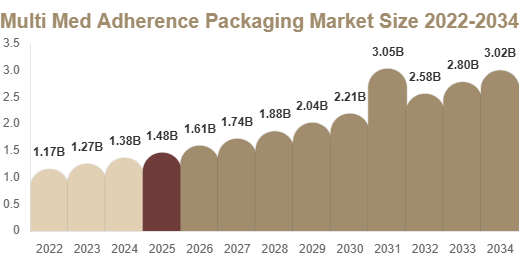
The global multi med adherence packaging market is witnessing strong growth due to rising healthcare awareness and increasing adoption of automated medication dispensing systems.
The market is projected to experience significant expansion by 2034, registering a steady CAGR during the forecast period from 2025 to 2034, driven by growing demand for patient-centric pharmaceutical packaging solutions.
Buy Now Full Report Here: https://packagingmarketinsights.com/report/multi-med-adherence-packaging-market
Overview of the Multi Med Adherence Packaging Market
Multi med adherence packaging refers to specialized pharmaceutical packaging systems that organize medications according to dosage schedules, helping patients manage multiple prescriptions efficiently. These packaging systems are commonly used for elderly patients, chronic disease management, and long-term medication therapies.
Healthcare providers are increasingly recognizing the importance of medication adherence in reducing hospital readmissions, improving patient outcomes, and lowering healthcare costs. Multi med adherence packaging enhances medication accuracy while minimizing confusion among patients taking multiple drugs daily.
The market is benefiting from advancements in automated packaging equipment, digital labeling technologies, and smart medication tracking systems. Pharmacies are also expanding their adoption of compliance packaging services to improve operational efficiency and patient care quality.
Market Drivers
Rising Geriatric Population
The growing aging population worldwide is one of the key factors driving demand for multi med adherence packaging solutions. Elderly patients often require multiple medications for chronic conditions such as diabetes, cardiovascular diseases, and hypertension.
Adherence packaging systems simplify medication schedules and reduce the risk of missed or incorrect dosages, improving patient safety and treatment effectiveness.
Increasing Prevalence of Chronic Diseases
The rising incidence of chronic illnesses is creating strong demand for advanced pharmaceutical packaging solutions. Patients with long-term conditions frequently require complex medication regimens that can be difficult to manage without organized packaging systems.
Multi med adherence packaging helps improve medication compliance, reducing complications and healthcare expenses associated with non-adherence.
Growth of Home Healthcare Services
The expansion of home healthcare and remote patient monitoring services is significantly supporting market growth. Patients increasingly prefer receiving healthcare support at home, especially elderly individuals and those with mobility limitations.
Adherence packaging provides convenient medication management for homecare patients while enabling caregivers to monitor medication intake more effectively.
Technological Advancements in Pharmaceutical Packaging
Automation and digitalization are transforming the multi med adherence packaging industry. Smart packaging technologies, barcode systems, automated dispensing equipment, and digital medication reminders are enhancing operational efficiency and patient engagement.
Pharmacies and healthcare facilities are investing in advanced packaging systems to streamline workflow and improve packaging accuracy.
Market Challenges
High Initial Investment Costs
The implementation of automated multi med adherence packaging systems requires substantial capital investment in specialized equipment, software, and training. Smaller pharmacies and healthcare providers may face financial barriers in adopting advanced packaging technologies.
Regulatory Compliance Requirements
Pharmaceutical packaging is subject to strict healthcare regulations and quality standards. Manufacturers and pharmacies must comply with labeling accuracy, patient safety, and medication traceability requirements, increasing operational complexity.
Limited Awareness in Emerging Markets
Although adherence packaging adoption is growing in developed economies, awareness remains relatively limited in certain emerging regions. Lack of healthcare infrastructure and limited reimbursement support may restrict market penetration in developing countries.
Market Segmentation Analysis
By Packaging Type
Blister Packaging
Blister packaging dominates the multi med adherence packaging market due to its excellent medication organization and tamper-evident features. Individual medication doses are sealed into separate compartments labeled by time and date.
Blister packs improve patient convenience and minimize the risk of medication errors.
Pouch Packaging
Pouch packaging is gaining popularity because it offers flexibility and portability for patients managing multiple medications. Automated pouch packaging systems are increasingly used by pharmacies for high-volume medication dispensing.
Strip Packaging
Strip packaging solutions are commonly used for unit-dose medication dispensing. These packaging systems provide secure medication storage and easy administration for patients and caregivers.
By Material
Plastic
Plastic materials remain widely used in adherence packaging applications due to their durability, transparency, and moisture protection properties.
Paper and Paperboard
Paper-based adherence packaging is gaining traction as healthcare providers seek sustainable packaging alternatives. Paperboard packaging also supports improved printability and labeling clarity.
Aluminum Foil
Aluminum foil is extensively utilized in pharmaceutical blister packaging because it provides superior barrier protection against moisture, light, and contamination.
By End User
Retail Pharmacies
Retail pharmacies represent a major end-user segment as pharmacies increasingly offer medication adherence programs to improve patient care and customer retention.
Hospitals and Clinics
Hospitals and healthcare facilities utilize adherence packaging systems to improve medication administration accuracy and reduce dispensing errors.
Long-Term Care Facilities
Long-term care centers and nursing homes are significant adopters of multi med adherence packaging solutions due to the high medication needs of elderly residents.
Homecare Settings
The growing demand for home healthcare services is increasing adoption of patient-friendly adherence packaging solutions for independent medication management.
Regional Analysis
North America holds a substantial share of the multi med adherence packaging market due to advanced healthcare infrastructure, high healthcare spending, and widespread adoption of automated pharmacy technologies.
Europe is also witnessing strong market growth driven by aging populations and increasing focus on pharmaceutical safety standards. Asia-Pacific is expected to experience rapid expansion during the forecast period due to improving healthcare infrastructure and rising awareness regarding medication adherence solutions.
Competitive Landscape and Top Players Analysis
The multi med adherence packaging market is highly competitive, with leading companies focusing on automation, patient safety, and sustainable pharmaceutical packaging innovations.
1. Omnicell Inc.
Omnicell Inc. is a major provider of medication management and adherence packaging solutions. The company focuses on automation technologies that improve pharmacy workflow and patient compliance.
2. McKesson Corporation
McKesson Corporation offers pharmaceutical distribution and medication adherence solutions designed to support healthcare providers and retail pharmacies.
3. Cardinal Health
Cardinal Health provides healthcare packaging products and automated medication dispensing technologies for hospitals and pharmacies.
4. Parata Systems
Parata Systems specializes in pharmacy automation solutions and adherence packaging equipment designed to improve medication dispensing efficiency.
5. Jones Healthcare Group
Jones Healthcare Group develops compliance packaging products for pharmaceutical and healthcare applications, emphasizing patient safety and packaging innovation.
6. TCGRx
TCGRx offers pharmacy automation and adherence packaging technologies for retail pharmacies and long-term care facilities.
7. Manrex Limited
Manrex Limited provides medication adherence packaging systems and pharmaceutical packaging equipment for healthcare institutions.
8. WestRock Company
WestRock develops paperboard-based pharmaceutical packaging solutions designed to support sustainability and medication protection.
Future Outlook
The future of the multi med adherence packaging market appears highly promising due to increasing healthcare digitization, rising chronic disease prevalence, and growing awareness regarding medication compliance.
The adoption of smart adherence packaging systems integrated with digital monitoring technologies is expected to accelerate significantly during the forecast period. Artificial intelligence, automated pharmacy systems, and connected healthcare devices are likely to transform medication management practices globally.
Sustainable pharmaceutical packaging materials and recyclable compliance packaging solutions are also expected to gain greater importance as healthcare providers prioritize environmental responsibility.
Conclusion
The multi med adherence packaging market is evolving rapidly as healthcare providers focus on improving patient safety, medication accuracy, and treatment adherence. The increasing prevalence of chronic diseases, expanding elderly population, and rising home healthcare services are driving strong market demand.
With continued technological advancements and growing investment in pharmacy automation systems, the global multi med adherence packaging market is expected to achieve substantial long-term growth through 2034.
Carded Packaging Market: Rising Demand for Retail-Ready and Sustainable Packaging Solutions
Temps de lecture :6 Minutes, 53 Secondes
The carded packaging market is witnessing strong growth worldwide due to increasing demand for lightweight, cost-effective, and visually attractive packaging solutions across retail industries. Carded packaging is widely used in consumer electronics, pharmaceuticals, food products, personal care items, and household goods because it offers product visibility, tamper resistance, and enhanced shelf appeal.
Manufacturers are increasingly adopting sustainable paperboard and thermoformed packaging materials to meet changing environmental regulations and consumer expectations. The rapid growth of organized retail and e-commerce platforms is also significantly contributing to the expansion of the carded packaging industry.
Get Your Sample Report Here: https://packagingmarketinsights.com/report/carded-packaging-market/request-sample
Market Size
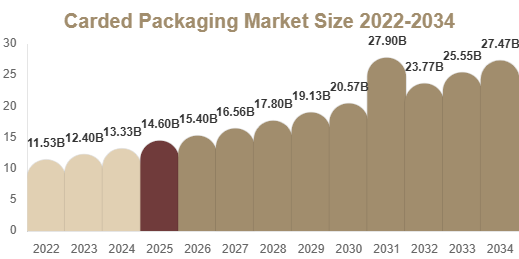
The global carded packaging market size is estimated at approximately USD 14.6 billion in 2025, reflecting strong adoption of thermoformed and paperboard-based carded packaging formats.
By 2026, the market is projected to reach around USD 15.4 billion, supported by increasing retail shelf visibility requirements and growing e-commerce packaging needs.
Looking ahead, the market is expected to attain a value of USD 27.9 billion by 2034, registering a CAGR of 7.5% from 2025 to 2034.
The carded packaging market is experiencing steady expansion driven by rising demand for cost-effective, lightweight, and visually appealing retail packaging solutions across food, pharmaceuticals, personal care, and consumer goods industries.
Buy Now Full Report Here: https://packagingmarketinsights.com/report/carded-packaging-market
Overview of the Carded Packaging Market
Carded packaging refers to packaging solutions that combine paperboard cards with plastic blister materials or clamshell structures to securely hold and display products. These packaging formats are widely utilized for retail merchandising because they provide excellent product visibility while protecting products from damage and tampering.
The increasing focus on sustainable packaging innovations has encouraged manufacturers to develop recyclable and biodegradable carded packaging materials. Retail brands are also investing in customized carded packaging designs to improve brand visibility and customer engagement.
The market continues to expand across developed and emerging economies due to rising demand from consumer goods, electronics, healthcare, and food industries. Technological advancements in thermoforming and digital printing are further enhancing packaging efficiency and product presentation capabilities.
Market Drivers
Growing Retail and E-Commerce Industry
The rapid expansion of retail chains and e-commerce platforms is one of the primary drivers of the carded packaging market. Retailers increasingly prefer carded packaging because it improves product visibility, supports branding, and simplifies inventory handling.
E-commerce companies also utilize durable carded packaging solutions to protect products during transportation while maintaining attractive product presentation.
Rising Demand for Sustainable Packaging
Environmental concerns and regulatory pressures are accelerating the shift toward recyclable and eco-friendly packaging materials. Paperboard-based carded packaging solutions are gaining popularity because they reduce plastic consumption and support sustainability goals.
Manufacturers are investing in biodegradable blister materials and recyclable packaging components to align with consumer preferences for environmentally responsible products.
Increasing Demand from Consumer Electronics
Consumer electronics products such as batteries, cables, earphones, chargers, and accessories widely utilize carded packaging for display and protection purposes. The growth of the electronics industry is creating consistent demand for advanced retail-ready packaging formats.
Enhanced Product Visibility and Branding
Carded packaging provides excellent visibility for retail products, helping brands attract customer attention in highly competitive retail environments. Custom printing, high-quality graphics, and transparent blister designs contribute significantly to marketing effectiveness.
Market Challenges
Environmental Concerns Related to Plastic Usage
Although sustainable materials are gaining traction, traditional blister packaging still relies heavily on plastic materials. Growing environmental concerns regarding plastic waste remain a major challenge for manufacturers.
Packaging companies must continuously innovate to reduce plastic dependency while maintaining product durability and visual appeal.
Fluctuating Raw Material Prices
The prices of paperboard, plastic resins, adhesives, and thermoforming materials continue to fluctuate due to supply chain disruptions and global economic conditions. Rising raw material costs can impact production margins and overall market profitability.
Complex Recycling Processes
Some carded packaging formats combine multiple materials, making recycling processes more complicated. Manufacturers are increasingly focusing on mono-material packaging designs to improve recyclability and reduce waste management challenges.
Market Segmentation Analysis
By Type
Blister Packaging
Blister packaging dominates the carded packaging market due to its strong product visibility and tamper-resistant properties. It is widely used for pharmaceuticals, electronics, and consumer products.
Thermoformed plastic blisters combined with printed paperboard cards provide effective product protection while improving shelf presentation.
Skin Packaging
Skin packaging involves tightly sealing a transparent plastic film over a product attached to a paperboard backing. This packaging type is commonly used for hardware tools, consumer electronics, and industrial products.
Skin packaging offers durability and secure product placement while minimizing packaging material usage.
Clamshell Packaging
Clamshell packaging is gaining popularity in retail applications because of its superior protection and resealable design. It is extensively used for food items, electronics, and household products.
Manufacturers are increasingly developing recyclable clamshell packaging formats to meet sustainability standards.
By Material
Plastic
Plastic remains the leading material segment due to its transparency, flexibility, and durability. PET and PVC are commonly used materials in blister and clamshell packaging applications.
Paperboard
Paperboard is witnessing significant growth because of increasing demand for sustainable and recyclable packaging solutions. It provides excellent printability and branding opportunities.
Others
Other materials include biodegradable films, recycled plastics, and composite materials designed to improve environmental performance.
By Application
Consumer Goods
Consumer goods represent a major application segment due to rising demand for attractive retail packaging solutions for toys, batteries, accessories, and household items.
Pharmaceuticals
Pharmaceutical companies widely utilize blister carded packaging for tablets, capsules, and medical devices because it provides tamper resistance and product safety.
Food and Beverages
Food packaging applications are expanding due to increasing demand for packaged snacks, frozen products, and ready-to-eat food items.
Electronics
Electronics packaging continues to drive market growth because carded packaging enhances product display and theft prevention in retail stores.
Regional Analysis
North America holds a substantial share of the carded packaging market due to strong retail infrastructure and high demand for consumer electronics packaging. Europe is also witnessing strong growth driven by sustainability regulations and increasing adoption of recyclable packaging solutions.
Asia-Pacific is expected to register the fastest growth during the forecast period due to expanding retail sectors, rising disposable income, and growing manufacturing activities in countries such as China and India.
Competitive Landscape and Top Players
The carded packaging market is highly competitive, with major companies focusing on sustainable innovations, advanced printing technologies, and lightweight packaging materials.
1. Sonoco Products Company
Sonoco Products Company is a leading provider of consumer and industrial packaging solutions. The company focuses on recyclable carded packaging and advanced thermoforming technologies.
2. WestRock Company
WestRock specializes in paperboard packaging solutions designed for retail and consumer product applications. The company emphasizes sustainable packaging innovation.
3. Amcor plc
Amcor plc offers flexible and rigid packaging solutions for multiple industries, including healthcare and consumer goods packaging.
4. Sealed Air Corporation
Sealed Air develops protective and retail packaging products designed to improve product safety and merchandising effectiveness.
5. Constantia Flexibles
Constantia Flexibles focuses on sustainable packaging materials and customized blister packaging solutions.
6. DuPont
DuPont supplies advanced packaging materials and protective films used in carded packaging applications.
7. Display Pack Inc.
Display Pack specializes in blister packaging and retail merchandising solutions for consumer products and electronics.
8. Bemis Company
Bemis Company provides innovative flexible and rigid packaging solutions for healthcare and retail packaging industries.
Future Outlook
The future of the carded packaging market remains highly promising due to increasing retail modernization, sustainability initiatives, and growing consumer demand for visually attractive packaging.
Manufacturers are expected to focus heavily on recyclable blister materials, lightweight packaging structures, and smart packaging technologies. Digital printing advancements and eco-friendly thermoforming processes are also expected to transform the competitive landscape.
The growing influence of e-commerce packaging requirements and retail branding strategies will continue supporting long-term market growth across global industries.
Conclusion
The carded packaging market is evolving rapidly with strong demand from retail, electronics, healthcare, and consumer goods industries. Sustainable packaging innovation, improved product visibility, and lightweight packaging solutions are becoming central market growth factors.
As manufacturers continue investing in recyclable materials and advanced packaging technologies, the global carded packaging market is expected to achieve significant expansion throughout the forecast period.

The Fundamentals of a Successful B2B Marketing Strategy
Temps de lecture :9 Minutes, 42 Secondes
Explore The Fundamentals of a Successful B2B Marketing Strategy
In the modern business environment, companies no longer rely solely on traditional networking or offline outreach to generate partnerships and sales. Digital transformation has reshaped how organizations communicate, research solutions, and evaluate potential service providers. As a result, B2B marketing strategies must be carefully planned, data-driven, and focused on building long term relationships rather than short term transactions.
A successful B2B marketing strategy focuses on understanding business audiences, addressing their challenges, and delivering meaningful value through consistent communication. Since B2B buying decisions often involve multiple stakeholders and extended evaluation periods, marketing efforts must support every stage of the buyer journey. By combining research, content development, technology, and analytics, organizations can build strategies that attract qualified prospects and strengthen their brand authority.
Understanding the B2B Marketing Landscape
B2B marketing differs significantly from consumer marketing. While consumer campaigns often appeal to emotions and quick purchasing decisions, B2B marketing focuses on logic, expertise, and long term value. Businesses look for solutions that improve efficiency, reduce costs, or support strategic goals.
Decision making in B2B environments usually involves teams rather than individuals. Procurement managers, executives, technical specialists, and department leaders may all participate in evaluating potential solutions. This complexity requires marketing strategies that provide detailed information and demonstrate credibility at every stage.
In addition, the B2B buyer journey tends to be longer. Prospects often spend weeks or months researching options before contacting a company. This makes educational content and consistent engagement essential components of successful marketing strategies.
Identifying the Target Audience
One of the most important foundations of a strong B2B marketing strategy is understanding the target audience. Businesses must clearly define the industries, company sizes, job roles, and challenges of the organizations they want to reach.
Audience research helps marketers create accurate buyer personas that represent ideal customers. These personas include information such as professional responsibilities, common challenges, decision making processes, and preferred communication channels. With these insights, companies can tailor their messaging to address specific needs and expectations.
Effective audience identification also improves marketing efficiency. Instead of trying to reach a broad and undefined audience, businesses can focus their efforts on the prospects most likely to benefit from their solutions.
Creating Valuable and Educational Content
Content plays a central role in B2B marketing because decision makers rely on information when evaluating potential partners or services. Informative content helps businesses demonstrate expertise, answer questions, and guide prospects through the research process.
Successful content strategies often include blog articles, whitepapers, research reports, webinars, and case studies. Each format provides opportunities to explain industry challenges and present practical insights. By consistently publishing high quality resources, organizations position themselves as trusted sources of knowledge.
Educational content also supports search visibility and digital discovery. When businesses create informative resources that address common industry questions, they attract professionals who are actively seeking solutions. Over time, this approach strengthens brand recognition and authority.
Building a Strong Digital Presence
A well structured digital presence is essential for modern B2B marketing. Potential clients frequently research companies online before making contact, so a professional website and active digital channels are critical.
A company’s website serves as the central hub of its marketing efforts. It should clearly explain services, highlight expertise, and provide valuable resources for visitors. Navigation should be simple, information should be well organized, and pages should be optimized for usability across devices.
Beyond the website, businesses should maintain active profiles on professional networks and relevant industry platforms. These channels allow companies to share insights, engage with industry discussions, and expand their reach among professional audiences.
The Importance of Search Visibility
Search engines play a significant role in how businesses discover solutions. Professionals often begin their research process by searching for information related to specific challenges or opportunities. As a result, visibility in search results is a key component of successful B2B marketing.
Search optimization involves creating content that aligns with user intent, maintaining a technically sound website, and ensuring that information is easy for search engines to understand. When businesses invest in search visibility, they increase the likelihood that their resources will appear when decision makers look for relevant information.
Many organizations collaborate with a B2B SEO Agency to enhance their search strategies and ensure their content reaches the right audience at the right time.
Leveraging Data and Analytics
Data-driven decision making is a fundamental element of modern marketing strategies. Analytics tools provide insights into how audiences interact with content, which channels generate the most engagement, and which campaigns produce measurable results.
By analyzing metrics such as traffic sources, engagement levels, and conversion patterns, marketers can refine their strategies and improve performance over time. Analytics also helps identify emerging trends and new opportunities for growth.
Regular performance analysis allows businesses to adapt quickly to changing market conditions and ensure that marketing resources are allocated effectively.
Supporting the Buyer Journey
B2B buyers typically move through several stages before making a purchasing decision. These stages include awareness, consideration, and decision making. A successful marketing strategy provides relevant information at each stage.
During the awareness stage, prospects are identifying challenges and exploring possible solutions. Educational articles, industry reports, and introductory videos help introduce the topic and provide valuable insights.
At the consideration stage, decision makers compare different approaches and providers. Detailed guides, case studies, and expert analysis help them evaluate available options.
Finally, during the decision stage, prospects look for evidence that a solution delivers real results. Testimonials, case studies, and detailed explanations help build confidence and support the final decision.
Strengthening Relationships Through Communication
B2B marketing is not only about generating leads. It is also about building lasting relationships with clients and partners. Consistent communication plays an important role in maintaining trust and demonstrating commitment to customer success.
Email newsletters, webinars, and industry updates allow businesses to stay connected with their audience over time. These channels provide opportunities to share knowledge, highlight innovations, and address emerging challenges.
Relationship-focused communication encourages ongoing engagement and often leads to repeat business and referrals.
Integrating Multiple Marketing Channels
A successful B2B marketing strategy uses multiple channels to reach audiences and reinforce messaging. Relying on a single platform limits visibility and reduces opportunities for engagement.
Content marketing, search optimization, social media engagement, email communication, and industry events all contribute to a comprehensive strategy. Each channel serves a specific purpose and reaches audiences in different ways.
When these channels work together, they create a consistent and cohesive brand presence. Prospects encounter the brand across various platforms, reinforcing recognition and credibility.
Building Credibility and Trust
Trust is a critical factor in B2B marketing because business decisions often involve significant investments. Companies must feel confident that their chosen partners can deliver reliable results.
Demonstrating expertise is one of the most effective ways to build credibility. Publishing research, sharing insights, and participating in industry discussions show that the organization understands the challenges faced by its clients.
Transparency also contributes to trust. Clearly explaining processes, sharing success stories, and providing honest information about capabilities helps prospects evaluate the company with confidence.
The Role of Continuous Improvement
Marketing strategies should never remain static. Markets evolve, technologies change, and customer expectations shift over time. Successful organizations regularly evaluate their strategies and make adjustments based on new insights.
Continuous improvement involves analyzing campaign performance, gathering feedback from customers, and staying informed about industry developments. By refining their approach regularly, businesses maintain relevance and effectiveness in a competitive environment.
Learning from both successes and challenges allows organizations to develop more effective strategies in the future.
Preparing for the Future of B2B Marketing
The future of B2B marketing will likely involve greater use of automation, artificial intelligence, and personalized communication. However, the fundamental principles of effective marketing will remain the same. Understanding customer needs, delivering valuable insights, and building trust will continue to drive successful strategies.
Organizations that invest in education, innovation, and data-driven decision making will be well positioned to adapt to emerging trends. By combining strong foundations with evolving technologies, businesses can create marketing strategies that remain effective for years to come.
Conclusion
A successful B2B marketing strategy requires careful planning, deep audience understanding, and consistent value creation. From defining target audiences to developing informative content and analyzing performance data, each element contributes to a comprehensive approach that supports long term business growth.
By focusing on trust, expertise, and meaningful engagement, companies can build strong relationships with potential clients and position themselves as reliable partners in their industry. As digital marketing continues to evolve, organizations that maintain these fundamental principles will remain competitive and effective in the B2B marketplace.
Frequently Asked Questions
What is a B2B marketing strategy?
A B2B marketing strategy is a structured plan that businesses use to promote their products or services to other businesses. It involves identifying the right target audience, creating valuable content, and using digital channels to communicate with decision makers. The goal is to generate qualified leads, build long term relationships, and support the sales process by providing relevant information that helps organizations make informed decisions.
Why is audience research important in B2B marketing?
Audience research helps businesses understand the industries, job roles, and challenges of their potential clients. By analyzing the needs and expectations of decision makers, marketers can create targeted messaging and content that addresses specific business problems. This approach improves communication effectiveness and ensures that marketing efforts reach organizations that are most likely to benefit from the company’s solutions.
What role does content play in B2B marketing strategies?
Content is a key component of B2B marketing because it educates and informs potential clients during the research process. Blog articles, case studies, whitepapers, and webinars provide insights that help businesses understand complex topics and evaluate possible solutions. High quality content demonstrates expertise and builds trust, which encourages prospects to consider a company as a reliable partner.
How does search visibility impact B2B marketing success?
Search visibility helps businesses appear when professionals search online for information, services, or solutions related to their industry. When companies optimize their websites and content for search engines, they increase the chances of attracting relevant visitors. This visibility allows organizations to reach decision makers who are actively researching solutions, making search optimization an important part of digital marketing strategies.
How can companies measure the success of a B2B marketing strategy?
Businesses can measure success using analytics tools that track metrics such as website traffic, engagement rates, lead generation, and conversions. These indicators reveal how audiences interact with marketing campaigns and which strategies produce the best results. By reviewing performance data regularly, companies can refine their marketing efforts and focus on activities that contribute most to business growth.
Why is relationship building important in B2B marketing?
B2B transactions often involve significant investments and long term partnerships. Because of this, trust and credibility play a major role in decision making. Relationship building through consistent communication, valuable insights, and reliable support helps companies strengthen their reputation. Over time, strong relationships can lead to repeat business, referrals, and long lasting professional partnerships.
What channels are commonly used in B2B marketing?
B2B marketing strategies typically involve multiple channels such as websites, content marketing, professional networking platforms, email communication, webinars, and industry events. Each channel helps businesses reach audiences in different ways. Using a combination of channels ensures that the brand remains visible and accessible throughout the buyer journey.
How often should B2B marketing strategies be updated?
Marketing strategies should be reviewed and updated regularly to stay effective in a changing digital environment. Businesses often evaluate their marketing performance monthly or quarterly to identify trends and opportunities for improvement. Regular updates ensure that campaigns remain aligned with industry developments, audience expectations, and evolving business goals.

The Difference Between Do-Follow and No-Follow Links
Temps de lecture :8 Minutes, 0 Secondes
Explore The Difference Between Do-Follow and No-Follow Links
Search engine optimization involves many elements, but links remain one of the most influential factors in how search engines evaluate websites. Links act as pathways that connect pages across the internet, helping search engines discover content and understand how different websites relate to each other. Among the many types of links used in SEO, two of the most discussed are do-follow links and no-follow links.
Understanding the difference between these two types of links is essential for anyone involved in digital marketing, content creation, or website management. While they may appear similar on the surface, they function differently in terms of how search engines interpret them and how they influence search visibility.
This article explores the meaning of do-follow and no-follow links, how they work, and why both are important in a balanced SEO strategy.
Understanding How Links Influence SEO
Before exploring the difference between do-follow and no-follow links, it is helpful to understand why links matter in search engine optimization.
Search engines use links to discover new webpages and evaluate the authority of those pages. When one website links to another, it signals that the linked page may contain valuable or relevant information. Over time, websites that receive many quality links tend to build stronger credibility in search engines.
Links also help search engines determine how topics are connected. For example, when a page about digital marketing links to an article about content strategy, search engines gain a clearer understanding of the relationship between those subjects.
Because of this role, links are often considered one of the foundational elements of SEO.
What Are Do-Follow Links
Do-follow links are the default type of hyperlink on the internet. When a webpage includes a standard link without any special attributes, search engines treat it as a do-follow link.
A do-follow link allows search engine crawlers to follow the link from one page to another. When this happens, the linking page passes a portion of its authority or ranking value to the linked page. This process is often referred to as link equity or link value.
In simple terms, do-follow links act as endorsements. When one website links to another with a do-follow link, it suggests that the content being referenced is useful or trustworthy.
Because of this, do-follow links can help improve the search visibility of the linked page when they come from credible and relevant websites.
What Are No-Follow Links
No-follow links include a specific attribute that tells search engines not to pass ranking value through the link. This attribute appears in the HTML code as rel= »nofollow ».
When search engine crawlers encounter a no-follow link, they may still follow the link to discover the page, but they typically do not transfer ranking authority from the linking page to the destination page.
The no-follow attribute was originally introduced to help reduce spam, especially in blog comments and forums. Before this attribute existed, spammers frequently added links in comment sections in an attempt to manipulate search rankings.
By using no-follow attributes, website owners could allow users to share links without unintentionally passing ranking value to unknown or untrusted sources.
How Search Engines Interpret These Links
Search engines analyze links to understand relationships between websites and evaluate content credibility. Do-follow links are interpreted as signals of trust and relevance, especially when they come from authoritative websites within the same topic area.
No-follow links, on the other hand, function more as references than endorsements. They allow websites to mention other pages without transferring ranking authority.
It is important to understand that search engines evaluate links in a broader context. Factors such as relevance, content quality, and site authority often matter more than the presence of a single link attribute.
Therefore, while do-follow links pass authority, both types of links contribute to a natural link profile.
Why Do-Follow Links Are Valuable
Do-follow links are valuable because they pass link equity from one page to another. When a reputable website links to your content with a do-follow link, it signals to search engines that your page may be credible and relevant.
Over time, multiple high-quality do-follow links can strengthen a website’s authority and improve its potential to rank for relevant search queries.
However, quality matters far more than quantity. A few links from trustworthy websites are often more beneficial than dozens of links from low-quality sources.
Search engines are also increasingly sophisticated in identifying unnatural link patterns, which means ethical link-building practices are essential.
The Role of No-Follow Links in SEO
Although no-follow links do not pass traditional link equity, they still play an important role in SEO.
First, they help create a natural backlink profile. In the real world, websites naturally receive a mix of do-follow and no-follow links. If a site only receives do-follow links, it may appear suspicious to search engines.
Second, no-follow links can still drive valuable referral traffic. When users click on a link in a forum discussion, social media post, or blog comment, they may discover useful content even if the link does not transfer ranking authority.
Third, no-follow links can increase brand visibility and awareness, especially when they appear on high-traffic platforms.
Common Places Where No-Follow Links Appear
No-follow links are commonly used in areas where user-generated content is present or where websites want to avoid passing authority to external sources.
Examples include blog comment sections, online forums, social media platforms, sponsored content, and advertising links.
Many platforms automatically apply the no-follow attribute to external links to reduce the risk of spam or manipulation.
This approach allows open discussions and community contributions without affecting the website’s link credibility.
Building a Balanced Link Strategy
A strong SEO strategy focuses on building a diverse and natural link profile. This means acquiring links from different sources, using a mix of attributes, and prioritizing relevance and quality.
Content that provides genuine value often attracts links naturally. Informative articles, detailed guides, original research, and useful tools are more likely to be referenced by other websites.
In practice, successful link strategies focus on long-term credibility rather than short-term ranking manipulation. Many professionals working with the Best SEO Agencies in the USA emphasize ethical link-building methods because they create sustainable results over time.
Common Misconceptions About No-Follow Links
One common misconception is that no-follow links have no SEO value at all. While they do not directly pass link equity, they can still contribute indirectly to visibility and traffic.
Another misconception is that do-follow links should be pursued aggressively at all costs. In reality, search engines evaluate links within the broader context of content quality and website reputation.
Attempting to manipulate link signals through artificial methods can lead to penalties or long-term ranking declines.
Instead, focusing on quality content and authentic relationships with other websites often produces more stable results.
The Future of Link Attributes in SEO
Search engines continuously refine how they interpret link signals. In recent years, additional attributes such as rel= »sponsored » and rel= »ugc » have been introduced to provide more context about the purpose of a link.
These developments show that search engines are moving toward more nuanced interpretations of links rather than relying solely on simple classifications.
As algorithms become more advanced, the overall credibility of content and the authenticity of link relationships will likely become even more important.
Why Understanding Link Types Matters
For website owners, marketers, and content creators, understanding the difference between do-follow and no-follow links helps create more informed SEO strategies.
Knowing when to use each type of link ensures that websites maintain credibility while still encouraging engagement and discussion.
Rather than focusing solely on technical attributes, the broader goal should be to build content that others genuinely want to reference and share.
When websites earn links naturally through valuable content and trustworthy information, they strengthen both their authority and their long-term search visibility.
FAQs
What is a do-follow link?
A do-follow link is a standard hyperlink that allows search engines to pass ranking value from one webpage to another.
What is a no-follow link?
A no-follow link includes an attribute that tells search engines not to transfer ranking authority to the linked page.
Do no-follow links help SEO?
While they do not pass traditional link equity, no-follow links can still drive traffic, improve brand visibility, and create a natural backlink profile.
Why were no-follow links introduced?
The no-follow attribute was created to reduce spam and prevent manipulation of search rankings through comment sections and user-generated content.
Should websites only focus on do-follow links?
No. A healthy link profile includes both do-follow and no-follow links because this reflects natural linking behavior.
Where are no-follow links commonly used?
They often appear in blog comments, forums, social media platforms, and sponsored or advertising links.
Can no-follow links still bring traffic?
Yes. Users can still click on no-follow links and visit the linked page, which can generate referral traffic.
What is the main difference between do-follow and no-follow links?
The main difference is that do-follow links pass ranking authority to the linked page, while no-follow links do not transfer that authority.

Do You Need a Personal Injury Lawyer in Phoenix for Minor Injuries?
Temps de lecture :8 Minutes, 9 Secondes
Accidents happen every day across Phoenix—from fender-benders on I-10 to slip-and-fall incidents in local businesses. Many people walk away thinking their injuries are “minor” and not worth calling a lawyer. But what seems small today can become expensive and complicated tomorrow.
So the big question is: Do you really need a personal injury lawyer in Phoenix if your injuries seem minor?
The answer depends on several factors—your symptoms, insurance involvement, liability, and Arizona law.
This in-depth guide explains when you can handle a minor injury claim yourself and when hiring a Phoenix personal injury lawyer could protect your rights and increase your compensation.
Understanding What Counts as a “Minor Injury”
Common Examples of Minor Injury Claims
A “minor injury” usually refers to physical harm that does not immediately appear severe or life-threatening, such as:
- Whiplash
- Soft-tissue injuries
- Small cuts or bruises
- Mild back or neck pain
- Minor sprains
- Low-impact car accident injuries
These injuries often don’t require hospitalization but may still require medical treatment, physical therapy, or follow-up care.
Why Minor Injuries Are Often Misleading
Many accident victims underestimate their injuries because symptoms can appear days or even weeks later. Arizona law recognizes that some injuries are discovered later through the “discovery rule,” which can affect filing deadlines in certain situations.
For example:
- Concussions may not show immediate symptoms
- Soft tissue damage may worsen over time
- Internal injuries may be delayed
This is one reason legal professionals often recommend documenting injuries early—even when they seem minor.
Arizona Personal Injury Law Basics Everyone in Phoenix Should Know
Before deciding whether you need a lawyer, it helps to understand how Arizona injury law works.
Arizona’s Statute of Limitations
In most Phoenix personal injury cases, you typically have two years from the date of the injury to file a lawsuit.
If you miss this deadline:
- Your case may be dismissed
- You may lose your right to compensation entirely
Important Exceptions
Certain cases have shorter or different deadlines:
- Claims against government entities may require a notice within 180 days and a lawsuit within one year.
- Claims involving minors may have extended timelines until the person turns 18.
- Some intentional injury claims may have only a one-year deadline.
Even for minor injuries, missing a legal deadline can permanently block your claim.
Arizona’s Comparative Negligence Rule
Arizona follows a pure comparative fault system. This means:
- You can still recover damages even if you were partially responsible.
- Your compensation is reduced by your percentage of fault.
In some cases, a person could still recover compensation even if they were mostly at fault, though the amount would be reduced significantly.
This rule often makes injury claims more complex than they appear.
What You Must Prove in a Personal Injury Case
To win compensation, you generally must prove:
- Duty of care
- Breach of duty
- Causation
- Damages
Even “minor” cases still require evidence such as:
- Medical records
- Accident reports
- Witness statements
- Proof of expenses
Can You Handle a Minor Injury Claim Without a Lawyer?
In some situations, yes.
When You May Not Need a Personal Injury Lawyer
You might handle a claim yourself if:
- Injuries are truly minor and resolved quickly
- Medical bills are very low
- Liability is clear
- The insurance company is cooperative
- No long-term effects exist
Simple property damage claims or very small medical expenses are sometimes resolved directly with insurers.
The Risks of Handling a Claim Alone
Even small cases can become complicated because:
- Insurance companies aim to minimize payouts
- Evidence may disappear quickly
- Settlement offers may undervalue your injuries
Insurance carriers know the legal deadlines and may delay negotiations, which can weaken your bargaining power if you don’t file in time.
When You SHOULD Consider Hiring a Phoenix Personal Injury Lawyer
Even for minor injuries, legal help may be valuable in certain situations.
Your Injuries Are Getting Worse
What starts as soreness can turn into:
- Chronic pain
- Nerve damage
- Mobility issues
If medical treatment continues, your claim value increases—and so does the complexity.
The Insurance Company Disputes Your Claim
You should consider legal representation if:
- Liability is denied
- Your injuries are questioned
- Settlement offers are too low
An attorney helps gather evidence and negotiate effectively.
Multiple Parties Are Involved
Cases involving:
- Multi-vehicle accidents
- Commercial vehicles
- Property owners
- Government agencies
often involve complex liability rules and strict deadlines.
You Missed Work or Lost Income
Even minor injuries can cause:
- Lost wages
- Reduced productivity
- Missed opportunities
These losses may be recoverable as damages.
Your Case Involves Comparative Fault
Because Arizona reduces compensation based on your share of blame, proving the other party’s negligence is critical.
A lawyer can:
- Investigate evidence
- Challenge blame arguments
- Protect your settlement value
How a Phoenix Personal Injury Lawyer Helps With Minor Injury Claims
Investigating the Accident
Attorneys collect:
- Police reports
- Medical records
- Witness statements
- Photos and video evidence
Early investigation is important because evidence can fade or disappear over time.
Handling Insurance Negotiations
Insurance adjusters are trained to:
- Reduce claim value
- Shift blame
- Question medical treatment
Legal representation levels the playing field.
Calculating the True Value of Your Claim
You may be entitled to compensation for:
- Medical expenses
- Future treatment
- Lost wages
- Pain and suffering
- Emotional distress
Many people underestimate the long-term costs of “minor” injuries.
Ensuring Deadlines and Legal Requirements Are Met
Missing paperwork, notice requirements, or deadlines can destroy your case—even if your injuries are legitimate.
Lawyers track:
- Filing deadlines
- Insurance requirements
- Evidence preservation
The Real Cost of Hiring a Personal Injury Lawyer in Phoenix
Most personal injury attorneys work on a contingency fee basis, meaning they only get paid if you win your case (common industry practice). This allows injury victims to pursue claims without upfront legal fees.
Because insurance companies often have experienced legal teams, having representation can significantly improve negotiation leverage.
Minor Injuries That Often Turn Into Bigger Claims
Whiplash and Soft Tissue Injuries
These can lead to:
- Chronic neck pain
- Headaches
- Reduced mobility
Symptoms sometimes appear days after the accident.
Slip and Fall Injuries
Even minor falls can cause:
- Back injuries
- Joint damage
- Long-term discomfort
Property owners may still be liable if negligence is proven.
Low-Speed Car Accidents
Even at low speeds, victims may experience:
- Muscle strain
- Delayed concussion symptoms
- Lingering pain
What Happens If You Don’t Take Action?
Failing to act quickly can result in:
- Lost evidence
- Faded witness memories
- Missed deadlines
- Reduced settlement value
In Arizona, missing the statute of limitations can eliminate your right to recover damages entirely.
Steps to Take After a Minor Injury Accident in Phoenix
1. Seek Medical Attention Immediately
Medical records establish the foundation of your claim and connect your injuries to the accident.
2. Document Everything
Keep:
- Photos
- Bills
- Prescriptions
- Communication with insurers
3. Report the Incident
Whether it’s a car crash or premises injury, official reports strengthen your case.
4. Avoid Quick Settlement Offers
Early offers often undervalue long-term medical costs.
5. Consider a Free Legal Consultation
Even if you decide not to hire a lawyer, understanding your rights can prevent costly mistakes.
Minor Injury vs Serious Injury: Where the Line Changes
|
Factor |
Minor Injury Case |
Serious Injury Case |
|
Medical treatment |
Short-term |
Long-term or surgery |
|
Claim value |
Lower |
Higher |
|
Complexity |
Simple |
High |
|
Legal need |
Sometimes optional |
Usually essential |
However, many cases start as “minor” and become more serious after medical evaluation.
The Phoenix Advantage: Why Local Legal Knowledge Matters
Local attorneys understand:
- Maricopa County court procedures
- Phoenix insurance trends
- Local accident patterns
- Arizona liability rules
Local experience can improve case strategy and negotiation outcomes.
Frequently Asked Questions
Is Hiring a Personal Injury Lawyer Required?
No. Arizona law does not require you to have an attorney, but legal guidance is strongly recommended—especially when claims become complex or disputed.
Can You Still Recover Compensation If You Were Partially at Fault?
Yes. Arizona’s comparative negligence system allows recovery even if you share blame, though compensation is reduced accordingly.
How Long Do Minor Injury Claims Take?
Timeline depends on:
- Medical recovery
- Insurance negotiations
- Evidence collection
- Liability disputes
Simple cases may settle quickly, while disputed cases can take months or longer.
Final Verdict: Do You Need a Personal Injury Lawyer in Phoenix for Minor Injuries?
The truth is—not every minor injury requires a lawyer, but many do benefit from legal guidance.
You may handle the claim yourself if:
- Injuries heal quickly
- Costs are minimal
- Liability is clear
However, you should strongly consider hiring a Phoenix personal injury lawyer if:
- Symptoms worsen
- Insurance disputes your claim
- You miss work
- Multiple parties are involved
- Fault is unclear
- Settlement offers seem low
Even minor injuries can lead to unexpected medical bills, long-term pain, or complicated legal issues. Arizona’s strict deadlines, comparative fault rules, and insurance tactics make professional guidance valuable in protecting your rights.
Conclusion & Call to Action
If you’ve been hurt in an accident—even one that seems minor—don’t assume your case isn’t worth pursuing. Small injuries can turn into costly problems, and missing key deadlines could mean losing compensation entirely.
The smartest step is to speak with a qualified personal injury lawyer in Phoenix for a free case evaluation. An experienced Phoenix personal injury attorney can review your situation, explain your options, and help you decide whether pursuing a claim is worthwhile.
Protect your health, your finances, and your legal rights—get professional advice before accepting any settlement or closing your claim.
To know more details, contact us
Name Of Law Firm: Karns & Karns Personal Injury and Accident Attorneys
Address: 2 N Central Ave Suite 1800, Phoenix, AZ 85004, United States
Phone: 602-854-2177
https://www.karnsandkarns.com/locations/phoenix-arizona-personal-injury-lawyers/

The Rise of Online Education: Transforming Learning in the Digital Age
Temps de lecture :2 Minutes, 50 Secondes

Online education has rapidly evolved from a supplementary learning tool into a mainstream platform reshaping how knowledge is delivered and accessed globally. With advancements in technology and the increasing flexibility demanded by learners, digital learning has become more than just a trend — it’s the future of education.
What Is Online Education?
Online education refers to learning that takes place over the internet, where students access course materials, attend virtual classes, and interact with instructors digitally rather than in a physical classroom. This model includes self-paced courses, real-time webinars, Massive Open Online Courses (MOOCs), and hybrid programs combining online and offline elements.
Key Benefits of Online Learning
1. Accessibility for All
One of the greatest strengths of online education is its ability to remove geographical and physical barriers. Students from remote regions or underprivileged backgrounds can now access world-class learning with just an internet connection and a digital device.
2. Flexibility and Convenience
Unlike traditional classroom schedules, online learning allows learners to study at their own pace and time. This flexibility benefits working professionals, parents, and students with other commitments, enabling them to balance education with life’s responsibilities.
3. Personalized Learning Paths
Modern online platforms use adaptive tools and analytics to tailor the learning experience to individual needs. Students struggling with a concept can review it more, and advanced learners can progress faster — something traditional classrooms often struggle to provide.
4. Cost-Effective Education
Digital learning often costs less than conventional education. Learners save on commuting, textbooks, and accommodation — while some courses are even available free or at significantly reduced fees.
5. Lifelong Learning Opportunities
Online education isn’t limited to a particular age group. Adults seeking upskilling, career changers, and hobby learners all benefit from the endless options available. This fosters a culture of continuous learning and personal growth.
Challenges in Online Education
Despite its many advantages, online learning also comes with challenges that students and educators must address:
1. Digital Divide and Internet Access
Not all learners have stable internet or modern devices. This digital gap can limit access for students in rural or low-income regions.
2. Lack of In-Person Interaction
Virtual environments can reduce face-to-face discussions and bonding among peers and teachers, leading some students to feel isolated.
3. Self-Discipline and Motivation
Online learners must manage their time and stay motivated without the structure of traditional schedules — something many struggle with.
4. Practical Hands-On Training
Certain fields like medical science, engineering, or laboratory-based studies benefit significantly from physical practice — a limitation that online platforms are still overcoming with simulations and hybrid models.
The Future of Online Education
Online learning continues to grow and innovate. Trends point toward more AI-driven personalization, interactive multimedia tools, and global accreditation standards that will make online credentials increasingly valuable in the job market.
Additionally, governments and educational institutions are formalizing digital learning — for example, progressive policies enabling fully digital universities highlight how integrated online education is becoming in mainstream policy frameworks.
Conclusion
Online education represents a major shift in how we learn, offering flexibility, accessibility, and opportunities for learners of all ages. While challenges remain, continued innovation and digital inclusion efforts are transforming education for the better. Whether you’re a student, professional, or lifelong learner, online education opens doors to new knowledge and global opportunities.

Top CPC Ad Networks for Healthcare and Medical Blogs
Temps de lecture :2 Minutes, 50 Secondes
If you’re a healthcare blogger, pharmacy content creator, or medical publisher, you’re sitting on a goldmine of monetization opportunities. Among these, CPC ads for medical publishers have become one of the most rewarding and beginner-friendly methods for generating consistent revenue from high-quality traffic.
Whether you’re running a niche health blog or a large-scale medical information site, joining the right CPC ad networks can help you earn money for every click on sponsored content. In this article, we’ll break down trends, benefits, and tips to help you get started with CPC and CPM monetization models for your medical blog.

CPC Ads for Medical Publishers: What’s the Buzz?
Cost Per Click (CPC) ads allow you to earn money every time a visitor clicks on an ad placed on your site. For medical publishers, CPC ads are especially effective due to:
- High-intent audiences (patients, caregivers, health-conscious users)
- Premium advertiser interest in health-related traffic
- Higher CPC rates compared to general niches
Ad formats like Native and In-Page Push ads blend seamlessly with your content and offer better CTR (Click-Through Rates).
Why Medical and Healthcare Blogs Should Consider CPC Ad Networks
Better Revenue Potential
Healthcare keywords often come with a higher CPC value, making every click more profitable than in most other niches.
Targeted Ads = Higher Engagement
CPC networks often serve relevant pharma, supplement, insurance, and medical device ads, increasing the chance of clicks.
Flexible Monetization
Combine CPC ads with CPM formats, affiliate links, and sponsored content to build multiple income streams.
Top CPC and CPM Ad Networks for Healthcare Blogs
Here are some top-performing ad networks tailored for medical publishers:
Mediavine (For High-Traffic Blogs)
- High CPC rates
- Medical niche performs well
- Native ad options
- Minimum traffic: 50,000 sessions/month
AdThrive (For U.S. Healthcare Bloggers)
- Health-focused content earns well
- Premium CPC/CPM payouts
- Strong ad optimization tools
Google AdSense (Beginner Friendly)
- Simple setup
- Wide range of healthcare advertisers
- Combine with in-page push ads
Ezoic
- AI-based optimization for CPC & CPM
- Medical publishers see great returns
- Access to direct pharma advertisers
Join Pharmacy Ad Network (Private Networks)
- Specializes in pharma and healthcare CPC ads
- Can be combined with in-page push formats
- High conversion and CTR rates
[Start Earning with Us Today]
Pharmacy Website Monetization Ideas
If you run a pharmacy-related blog or eCommerce store, consider these monetization methods:
- Native CPC Ads via health-focused ad networks
- Affiliate programs for supplements and health devices
- Sponsored content from pharma brands
- CPM Ads for high-traffic informational content
- Push notifications for user re-engagement
How to Join a Medical Ad Network as a Publisher
- Evaluate Your Content Niche – Is it general health, pharma, wellness, or medical research?
- Check Traffic Requirements – Networks like Mediavine and AdThrive require minimum traffic.
- Apply to Trusted Networks – Choose platforms known for healthcare digital ad publishers.
- Optimize Ad Placement – Use sticky widgets, native ads, and sidebar placements to boost CTR.
- Track and Scale – Use Google Analytics + Ad Manager to measure CPC performance.

Conclusion
The healthcare niche is profitable, but only if monetized the right way. By choosing the top CPC ad networks for healthcare and medical blogs, you open the door to consistent passive income. Focus on engaging, accurate content, and let CPC, CPM, and native ad formats do the rest.
The Future of Medical Blog Monetization in Australia
Temps de lecture :4 Minutes, 16 Secondes
In the ever-evolving world of digital healthcare content, medical blog monetization is gaining momentum, especially in Australia. As healthcare professionals and pharmacy bloggers increasingly turn to digital platforms, monetizing medical blogs has become not just an option but a strategic income channel. With more Australians turning to online sources for medical guidance, now is the perfect time to explore how medical blogs can generate consistent, ethical revenue.

Trends Shaping Medical Blog Monetization in Australia
Growth of Healthcare Content Consumption
The demand for trustworthy healthcare information is rising, and Australians are no exception. From general wellness to prescriptions, blogs have become a key go-to source, opening doors for monetization.
- Health-related search terms have surged by over 40% since 2020.
- Pharmacy-related blogs see higher engagement during flu seasons and public health events.
Shift Toward CPC and CPM Pricing Models
The advertising industry is increasingly relying on CPC (Cost Per Click) and CPM (Cost Per Mille) models for medical content.
- CPC ads for medical publishers help earn revenue every time a user clicks on a sponsored ad.
- CPM ads for medical blogs reward publishers based on impressions, making them ideal for high-traffic pages.
Programmatic & Native Advertising Integration
Modern monetization strategies now heavily incorporate Programmatic Ads and Native Ads to blend seamlessly with content, particularly helpful in medical niches where user trust is key.
Ad Formats Gaining Popularity:
- Native Ads: Seamlessly integrate with blog content.
- In-Page Push Ads: Delivered directly within the user’s browsing session, increasing engagement without being intrusive.
Why You Should Monetize Your Medical Blog Today
Generate Passive Income
Even if you’re a part-time pharmacist, doctor, or healthcare writer, a well-monetized blog can create consistent income streams.
Pharmacy blog income ideas:
- Sponsored prescription content
- Affiliate links to OTC products
- CPC campaigns for health insurance and wellness apps
Promote Accurate, Ethical Information
With monetization, you can reinvest into higher-quality content, SEO tools, and expert interviews, enhancing credibility and visibility.
Diversified Revenue Streams
Why rely on one income model when you can diversify?
Popular medical blog monetization options:
- Direct Ads for Medical Websites: Partner with healthcare brands for targeted promotions.
- CPM Networks: Perfect for blogs with high visibility.
- CPC Ad Networks: Google AdSense alternatives like 7Search PPC can yield better returns in niche categories.
Tips for Successful Medical Blog Monetization
Focus on High-Value Keywords
Target long-tail medical search terms like “best OTC for migraines in Australia” to increase ad revenue.
Choose the Right Pricing Model
If your blog gets:
- High traffic but lower engagement? Go with CPM.
- Moderate traffic but loyal readers? Choose CPC or Native Ads.
Segment Your Content
Use categories such as:
- Prescription Advice
- Pharmacy News
- Medical Reviews
This helps in serving programmatic ads for pharmacy blogs based on content relevance.
Optimize UX
Google prioritizes blogs with:
- Mobile responsiveness
- Fast load speed
- Ethical ad placement (e.g., In-Page Push, not popups)
Use a Medical Ad Network
7Search PPC and similar niche platforms provide better targeting and higher returns than generic ad networks.
Best Ad Formats for Medical Blogs
|
Ad Format |
Description |
Best For |
|
Native Ads |
Ads that match your blog’s design and flow |
Reader trust, content-heavy blogs |
|
In-Page Push Ads |
Push-style ads that appear while users browse |
Non-intrusive engagement |
|
Banner Ads |
Traditional ad slots (header, sidebar) |
CPM campaigns |
|
Text CPC Ads |
Keyword-targeted clickable text links |
High CTR and conversions |
Top Monetization Models in 2025
|
Model |
How It Works |
Ideal For |
|
CPC (Cost Per Click) |
Get paid per ad click |
Niche blogs with quality content |
|
CPM (Cost Per Mille) |
Paid per 1,000 impressions |
High-traffic blogs |
|
Direct Ads |
Negotiate directly with brands |
Authority blogs |
|
Affiliate Marketing |
Earn per lead or sale |
Product review blogs |
|
Programmatic Ads |
Automated ad bidding system |
Large blogs with regular traffic |
[Start earning from your medical expertise today]
Conclusion
Monetizing your medical blog in Australia is no longer just a side hustle—it’s a legitimate way to share knowledge while building wealth. With the right blend of CPC, CPM, and native ads, plus tools like In-Page Push, you can turn your blog into a valuable source of income and community health guidance.
Frequently Asked Questions (FAQs)
What’s the best monetization model for new medical blogs?
Ans: Start with CPC ads for medical publishers, as they’re easy to implement and don’t require massive traffic to generate revenue.
Are native ads better than banner ads?
Ans: Yes. Native ads offer higher engagement and trust, especially in medical niches where credibility matters.
Can I run direct ads without an ad network?
Ans: Absolutely. You can negotiate directly with pharmaceutical companies or local clinics for display space on your blog.
How do I ensure my ads remain compliant with Australian regulations?
Ans: Work with ad platforms that specialize in healthcare (like 7Search PPC), and avoid ads that make unverified medical claims.
Is it possible to monetize prescription-related content?
Ans: Yes, using programmatic ads for pharmacy blogs or affiliate links to approved online pharmacies, while ensuring content is legally and ethically sound.
Are Wellness Center Ads the Key to Attracting New Clients?
Temps de lecture :4 Minutes, 30 Secondes
The health and wellness industry is booming, and with it comes increased competition among wellness centers, spas, clinics, and holistic health practitioners. To stand out, many are turning to targeted Wellness Center Ads to attract new clients. But are these ads truly effective, or just another marketing buzzword?
In this blog, we’ll break down how health and wellness advertising works, the strategies that successful wellness clinic promotions use, and how you can leverage wellness center digital ads to boost your client base, especially if you’re just getting started.
The Growing Demand for Wellness Services
The global shift toward preventative care, holistic health, and mental well-being has turned wellness into a lifestyle. From yoga studios and chiropractic clinics to meditation centers and nutrition services, the demand for wellness has created a surge in service providers—and, naturally, in the need for standout advertising.
That’s where Wellness Center Ads come into play.
What Are Wellness Center Ads?
Wellness Center Ads are promotional campaigns designed specifically for wellness-based businesses. These ads can be delivered through search engines, social media, display networks, and health-specific platforms. They aim to inform, engage, and convert potential clients who are actively seeking wellness solutions.
Types of Wellness Center Ads include:
- Google Search Ads targeting “best wellness center near me”
- Facebook and Instagram ads highlighting spa packages or wellness treatments
- YouTube video testimonials from real clients
- Display ads on health blogs or fitness traffic networks
These formats help wellness centers build trust and increase visibility in a crowded digital space.
Why Are Wellness Center Ads So Effective?
Unlike traditional marketing, digital wellness center digital ads are highly targeted. Using advanced audience segmentation and retargeting, wellness businesses can reach people based on location, behavior, health interests, and even insurance types.
Here’s why they’re essential:
- Hyper-Targeted Reach: You can focus your budget on specific age groups, locations, and even lifestyle interests like fitness, meditation, or organic nutrition.
- Cost Efficiency through PPC Models: With health niche PPC advertising, you only pay when someone clicks your ad. That’s a high return on investment compared to traditional media.
- Adaptability: You can instantly change your creative, offer, or message based on campaign performance.
- Trust and Awareness: With consistent visibility, you build brand trust—a must for any health-related service.
Platforms That Work for Wellness Clinic Promotions
The success of any campaign depends on where your audience is spending time. Some of the best platforms for wellness clinic promotions include:
- Google Ads: Great for capturing high-intent clients searching for wellness solutions.
- Facebook & Instagram Ads: Perfect for brand awareness and community engagement.
- YouTube Pre-Roll Ads: Use storytelling to create emotional connections.
- Programmatic Ads via Healthcare Ad Networks: Reach niche audiences via health insurance ads, integrated health platforms, or fitness traffic networks.
Partnering with a healthcare ad agency can help optimize your media mix and ad spend based on performance data.
Crafting High-Impact Wellness Ads
Creating an effective wellness center digital ad campaign is more than just posting a nice image or discount. It requires thoughtful planning and execution.
- Visual Appeal: Use calming imagery, natural color palettes, and authentic photos of your services or location.
- Clear CTA: Whether it’s “Book a Free Consultation” or “Join Our 7-Day Detox Challenge,” your call to action must be compelling.
- Local SEO + PPC: Combine integrated health ads with local SEO strategies to target people nearby.
Mobile Optimization: Make sure your landing pages and booking system work seamlessly on smartphones.

<<Start Your Health Campaign Now>>
Real-World Example
A wellness spa in California partnered with a healthcare ad agency to launch a health and wellness advertising campaign. By combining Facebook video testimonials with Google Ads targeting “detox spa in LA,” they increased bookings by 60% in three months.
The key? Targeted health niche PPC advertising with strong visuals, trust-building messages, and mobile-first landing pages.
Conclusion
So, are Wellness Center Ads the key to attracting new clients? The answer is a resounding yes—if done right.
In today’s saturated health market, a generic approach no longer cuts it. You need a focused advertising strategy that combines wellness center digital ads, targeted platforms like, and performance tools from a skilled healthcare ad agency.
With the right blend of creativity, data, and platforms, your wellness business can thrive and consistently attract new, loyal clients.
Frequently Asked Questions (FAQs)
What are the best platforms for running Wellness Center Ads?
Ans: Google Ads, Facebook/Instagram, YouTube, and health-specific display ad networks are great for reaching people interested in wellness services.
How much do I need to spend on wellness advertising?
Ans: Budgets vary, but starting with $500–$1,000 monthly on health niche PPC advertising can yield good results if well-targeted.
Should I hire a healthcare ad agency or DIY?
Ans: If you’re new, partnering with a healthcare ad agency can help you avoid costly mistakes and optimize ROI. Over time, you can scale or bring management in-house.
What should I include in a wellness clinic ad?
Ans: Highlight your unique services, show testimonials, add a strong CTA, and ensure your ads match your branding tone and visual aesthetic.
Can these ads help with insurance-based wellness clients?
Ans: Yes, using health insurance ad targeting, you can tailor your message to clients who are covered and more likely to book services.
How to Monetize Your Website with Cryptocurrency in 2025?
Temps de lecture :6 Minutes, 21 Secondes
In the dynamic world of online gaming, casino websites have gained massive traction, attracting players from all over the globe. While building and managing such a platform is already a challenge, the real question lies in how to monetize a casino website effectively. With the proper strategies, not only can you increase your revenue streams, but you can also ensure long-term sustainability and growth.
From affiliate programs to in-house games and digital advertising, this blog explores the best ways to make your casino site profitable. Whether you’re planning to build your first gambling platform or already run one and want to improve earnings, this guide provides in-depth insights into what works in 2025.

Understanding the Potential of Online Casino Revenue
Online casinos are part of a multi-billion-dollar industry that continues to grow year after year. With advancements in internet accessibility, mobile gaming, and cryptocurrencies, the market is more accessible than ever. The appeal lies in its global reach, availability 24/7, and wide range of games—from poker and blackjack to slots and sports betting.
To monetize a casino website, you need to look beyond just offering games. You must understand your audience, regulatory requirements, user behavior, and digital marketing techniques to drive traffic and conversions.
Building the Foundation: How to Make a Casino Website That Can Earn
Before discussing monetization strategies, it’s important to understand the basics of setting up a casino platform that supports revenue growth.
The process of how to make a casino website begins with choosing a niche—such as sports betting, slot machines, or live dealer games. Then comes licensing. Most regions require gambling licenses, and obtaining one legitimizes your operations and builds trust. After that, invest in a secure and scalable website infrastructure. Use a high-quality gaming engine or partner with software providers like Microgaming, Playtech, or Evolution Gaming.
Once the platform is live, ensure it offers seamless payment integrations, supports multiple currencies, and complies with KYC/AML policies. An optimized mobile version, intuitive user interface, and fast loading speed are also essential for retaining players.
<<Start Monetizing Now>>
Affiliate Marketing: A Reliable Revenue Channel for Casino Sites
One of the most effective ways to monetize a casino website is through affiliate marketing. This involves partnering with other sites or influencers to refer traffic to your platform in exchange for commissions.
You can also act as an affiliate yourself—promoting other gambling platforms or related services and earning from every click, lead, or sign-up. This model requires creating engaging content such as game reviews, strategy blogs, or video tutorials.
Affiliate networks like Income Access, ReferPartners, or Gambling Affiliation are ideal for finding trustworthy affiliate programs in the gambling niche. As your traffic grows, so does your commission income.
Offering In-House Games and Betting Services
If you’re looking for full control over monetization, offering your own games is a powerful approach. In-house games allow you to define payout rates, bonus structures, and loyalty programs. They’re also more profitable over time since you avoid revenue-sharing with third-party providers.
Sports betting is another high-revenue option. By enabling users to place bets on real-time sports, esports, or even virtual events, you can generate commissions, spread margins, and increase user engagement. Just ensure the platform is user-friendly and offers live odds and statistics to keep users coming back.
Integrating Ads Without Disrupting Gameplay
Digital advertising is a consistent way to monetize any web property, including gambling websites. Although some casino platforms avoid it to maintain a premium experience, many benefit from programmatic ads, CPM campaigns, or push notifications.
You can run banner ads for gambling-related products, crypto wallets, VPNs, or even affiliate platforms. Google AdSense typically restricts gambling content, so you’ll need to use specialized networks like PropellerAds, Adsterra, or Coinzilla.
The key to success lies in ad placement—ads should blend naturally into your website design without disrupting user experience. Pop-unders, native ads, or interstitials between games often work well when optimized correctly.
Email Marketing and Retargeting for Conversion Optimization
A successful casino business doesn’t stop at acquiring users. Retaining and converting them into paying customers is crucial. Email marketing is a proven tool that helps drive player loyalty, boost engagement, and increase LTV (lifetime value).
Send regular newsletters with game updates, deposit bonuses, jackpot announcements, and loyalty rewards. You can also use behavior-triggered emails—such as abandoned registration emails or reactivation offers—to bring back inactive users.
Retargeting ads on social media and display networks also play a vital role. If a user visits your site and doesn’t convert, you can show them tailored ads later to encourage sign-ups or deposits.
Leveraging Cryptocurrency for Faster Monetization
With the rise of digital finance, accepting cryptocurrency payments is an excellent way to attract tech-savvy users and streamline global transactions. Many players prefer platforms where they can deposit and withdraw in Bitcoin, Ethereum, or USDT due to the anonymity and faster processing times.
Adding support for crypto not only widens your user base but also positions your brand as a modern and secure gambling platform. Additionally, you can explore blockchain-based gaming or NFT rewards for high rollers.
If you’re wondering, “Can I make money with a casino online using crypto?” the answer is yes—especially if you offer exclusive bonuses, maintain transparency, and build trust through provably fair games.
VIP Programs and Tiered Memberships for High-Value Users
Loyalty systems are essential to maintaining a profitable casino operation. By introducing VIP programs or tiered memberships, you can incentivize larger deposits and higher player activity.
Offer rewards like cashback, free spins, birthday gifts, early access to games, and dedicated account managers. These perks not only retain valuable players but also create a sense of exclusivity that keeps them invested in your platform.
Make sure your loyalty system is transparent, easy to understand, and automated to reduce backend work.
Mobile App Monetization for Gambling Platforms
A growing percentage of users prefer mobile gaming. Developing a native app for your casino site can unlock new monetization avenues.
You can integrate in-app purchases, exclusive mobile-only bonuses, or even premium features like live streaming. Moreover, push notifications allow direct marketing, enabling timely communication for limited-time offers, game launches, or jackpot alerts.
Remember to list your app only in compliant app stores and clarify age restrictions and regional limitations.

Content Marketing and SEO to Attract Organic Traffic
A major part of monetization depends on your website’s ability to attract consistent and relevant traffic. Investing in content marketing and SEO is a long-term strategy that can yield high ROI.
Start a blog that covers gaming tips, betting strategies, game reviews, or regulatory updates. Use your focus keywords like “how to make money with a casino online” and “how to make a casino website” naturally within the content. Optimize meta descriptions, alt texts, internal links, and build quality backlinks to increase domain authority.
Ranking well on Google ensures free, targeted traffic that converts much better than paid ads.
Conclusion
To monetize a casino website in 2025, you need a combination of smart technology, creative marketing, and robust compliance. Whether you choose affiliate marketing, run your own games, display ads, or explore cryptocurrency, success depends on user experience and trustworthiness.
Understanding how to make a casino website that balances functionality, appeal, and security is just the start. With consistent effort and the right monetization model, your platform can become a sustainable and profitable venture in the ever-evolving online gaming landscape.
How to Choose the Right Publisher Network for Your Niche
Temps de lecture :5 Minutes, 36 Secondes
If you’re running a blog or content site, you’ve probably thought about how to earn from it. One of the most common ways is through Publisher networks. But figuring out which one is right for your niche isn’t always easy. There are so many options out there, and each promises great results. The truth is that what works well for one type of content might not work for another. That’s why it’s important to find a network that fits your niche, your website, your traffic, and your goals.
In this post, I’ll guide you through the top ad networks for publishers that will undoubtedly support your monetization efforts.

What is a Publisher Ad Network?
A publisher ad network is a platform that helps website owners (publishers) make money by showing ads on their sites or pages. It connects publishers with advertisers who want to promote their products or services. The ad network for publishers handles quick ad delivery, the right ad match, payments, and other necessary elements for monetization.
When visitors click on or view these ads, the publisher earns money based on a per-click, per-action, or per-thousand-impressions model. It’s a simple way for website owners to earn revenue without finding advertisers themselves.
<<Turn your passion into profit today>>
Why is an Ad Network Important For a Publisher
There are plenty of reasons that show the real importance of an ad network for publishers. Some of them are given below.
Easy Way to Earn Money
An ad network helps publishers make money by showing ads on their websites and apps. Instead of finding advertisers one by one, the network brings them in. It not only saves time and effort but also allows publishers to focus on their content while still earning from their traffic through ads that match their audience.
Access to More Advertisers
Ad networks connect publishers with many advertisers at once. This increases the chance of getting high-quality ads and better prices. Also, they have a broad network of advertisers from various niches, which means you can easily get the ad that fits with your niche and is more likely to be relevant to the audience, which improves the chances that people will click on it.
Real-Time Reporting
You can easily get access to total clicks, total impressions, earned income, withdrawals, and more—all from a single dashboard when you monetize your website with any publisher ad network. With this information, you can make quick adjustments to improve performance and maximize revenue.
Reliable Payments
When you join any publisher network, you don’t need to chase advertisers to ask for the money that you have earned by selling the website/app traffic through online ads. Publisher advertising networks handle the payment process from your side. They offer multiple payout options, allowing you to easily withdraw your earnings through the method you’re most comfortable with once your payment crosses the minimum threshold.
Top 10 Ad Networks for Publishers
Now that you understand the publisher network, let’s make your job easier. I have researched the top 10 ad networks that can help you earn more money by selling your website or app traffic.
7Search PPC
7Search PPC ad network is gaining a lot of popularity nowadays, and the reason behind this is the kind of monetization services they deliver, which publishers truly desire. The best part is that you will get only relevant ads, and all ads fall under the high-paying category, so both your audience and you will be happy.
They offer five ad formats to choose from, along with various payout options. Also, their quick support ensures you can get assistance whenever needed. Therefore, we can confidently state that 7Search PPC is one of the top ad networks for publishers.
PopAds
If you’re looking to get the right value for your traffic, try PopAds. This ad network specializes in pop-under ads that open behind the main browser window. It’s a good option if you are okay with the silent ad format and want fast payments and high rates for your website traffic.
Amazon Publisher Services
Amazon’s network gives publishers access to high-quality ads and demand from top brands. First of all, we have known the name ‘Amazon’ for a very long time in the eCommerce sector, so it is easy for us to trust it when it comes to monetizing a website. It is known for quick ad delivery, good support, and reliable earnings, especially if you have solid U.S. traffic.
AdCash
This publisher network offers a variety of ad formats, including interstitials, auto tags, display banners, native ads, and pop-unders. It’s designed for publishers with global traffic and provides real-time reporting and tools to maximize revenue. They operate in over 195 countries, so there’s a high likelihood that your website will be approved for monetization if you have quality traffic.
SmartyAds
SmartyAds is a programmatic ad platform with advanced targeting and real-time bidding. It supports various ad types and works best for publishers looking to automate and optimize their ad monetization.
TrafficForce
TrafficForce is a real-time ad exchange that focuses heavily on adult and entertainment niches. It offers full control over ad placements and works well for publishers with high-volume traffic.
Media.net
This contextual ad network is ideal for publishers focused on long-term monetization. It’s a great choice for content-heavy sites and blogs, especially those targeting U.S. or English-speaking audiences.
Infolinks
Infolinks places ads in non-traditional formats, such as in-text, in-frame, and overlays, and this specialty makes it one of the top CPC ad networks for publishers. It’s non-intrusive and works well alongside other ad networks to boost your site’s revenue without cluttering it.
AdBlade
AdBlade focuses on premium and brand-safe ads through native and content-style placements. It’s best suited for sites with high traffic and strict content standards looking for quality advertisers.
AdMaven
AdMaven provides multiple ad formats, including pop, push notifications, and banners. It’s beginner-friendly, supports all site sizes, and pays well for international traffic, especially in Tier 2 and Tier 3 countries.
Conclusion
There’s no magic answer when it comes to choosing an ad network. It all depends on what kind of site you have and what your visitors respond to. The best thing is to test a couple of options and stick with the one that feels right and pays well. With the right fit, making money from your site can be pretty straightforward.
Is There a Better AdThrive Alternative for Website Monetization?
Temps de lecture :6 Minutes, 52 Secondes
If you’re a publisher in the website monetization space, you’ve probably heard about AdThrive (now Raptive). It’s a well-known ad network that acts as a mediator between advertisers and publishers.
While its advanced features and low payout threshold ($25) make it every other publisher’s favourite, there are still lots left behind. Their eligibility criteria are quite challenging to meet, and other limitations are difficult to overcome, especially for new publishers.
If you’re someone who cannot meet these eligibility criteria or wants to move away from AdThrive for other reasons, then you’re in the right place. In this blog, we’ll list down some of the best Adthrive alternatives you can use to monetize your website instead.

Understanding AdThrive
Adthrive, now rebranded as Raptive, is a full-service creator media company that empowers creators and publishers to make revenue with their website.
Although the platform offers higher payments than most ad networks, its list of limitations remains. Here’s what most publishers have faced:
- Eligibility that’s tough to meet: Your website needs a consistent stream of 100,000 page views every month, Google Analytics needs to be set up properly, content should be 100% original, and the majority of the traffic should come from the US, the UK, Australia, and New Zealand.
- Limited control: Publishers have limited control over the kind of ads that will be displayed on their website.
- Lack of communication: Many publishers have faced a lack of communication and support from AdThrive’s team.
- High processing fee: Some users have also reported a high processing fee when receiving payouts.
All this puts the platform in a gray area, so you may want to consider other AdThrive alternatives instead.
5 Best AdThrive Alternatives
Now, let’s go over the best website monetization platforms and networks that act as AdThrive alternatives.
1) 7Search PPC
The top spot on our list goes to 7Search PPC, a premium advertising and monetization platform that connects publishers looking to monetize their sites with advertisers looking to run ads. They offer 100% coverage across a wide spectrum of websites, categories, and traffic segments. No matter where your traffic originates from, 7Search PPC is here to monetize it all with minimal conditions.
Key Features:
- Good for big and small publishers alike, with a minimum traffic requirement of 1,000 page views per month.
- Covers and monetizes traffic from all devices- desktop and mobile phones.
- High-paying ads are displayed on your site only from desired locations and niches.
- Manual review of all ads to keep your website and data safe.
- 5 versatile ad formats to choose from: text, banner, native, popunder, in-page push.
- Caters to over 16+ verticals (iGaming, finance, eCommerce, eLearning, etc.).
- 24*7 client support available to help with campaign creation and payouts.
- Payout threshold depends on the payment methods, with the lowest being $100.
<<Join as a Publisher Today!>>
2) Media.net
Media.net is a popular global ad network for website monetization that works on the supply side for publishers. It was built with the vision of empowering independent media owners and helping them monetize their content. Having evolved in the last 15 years, the platform now aims to build long-term solutions for publishers to curate and monetize their inventory meaningfully in a constantly changing environment.
Key Features:
- Basic entry requirements, including original content and compliance with Better Ads Standards.
- Exclusive performance budgets for monetization in a cookieless environment.
- Premium demand across all ad formats- including display, native, and video from leading brands and agencies.
- AI-driven yield optimization features to drive max revenue on all inventory types.
- Pre-bid header bidding to maximize the value of each impression.
- AI-enabled vertical video experience for the open web.
3) Ezoic
Ezoic is one of the most popular CPM publisher networks that works on data-driven monetization. Publishers of all sizes who seek advanced optimization and are willing to experiment with AI-driven strategies for revenue growth. The platform is a spot-on AdThrive alternative as it uses machine learning algorithms to test different ad placements, sizes, and formats to maximize ad revenue.
Key Features:
- Low entry requirements, making it perfect for both small and big publishers.
- Different plans are available for websites with more and fewer than 10,000 views.
- Supports a broad range of ad formats, including display, video, native, and interstitial.
- Intelligent ad management so that you don’t have to make adjustments daily.
- Real-time analytics and insights on performance metrics like revenue, user behavior, and content engagement.
- The minimum payout threshold is $20 on multiple payment options.
4) TripleLift
Another AdThrive alternative that’s worth a mention is TripleLift. The platform is known for its creative and technology-driven solutions that scale and personalize engaging ads across all platforms. You can discover new revenue opportunities and drive incremental dollars without incurring additional costs or compromising your audience’s experience.
Key Features:
- Access to premium demand to help you earn better CPMs and steady revenues.
- Ad formats that can be seamlessly integrated on your website to match your content naturally- display, native, video, and retail media.
- Data and targeting solutions to improve your fill rate and monetize in cookie-constrained environments.
- Advanced creative technology that transforms ads into engaging experiences.
5) Google AdSense
Last but not least- our good old Google AdSense. The global ad network is often the first choice for most publishers, making it one of the best AdThrive alternatives. Not only is it one of the best ads networks for website monetization, but it is also completely free to use. AdSense matches ads to the publisher’s content and audience based on a broad variety of factors like keywords, interests, and location.
Key Features:
- No minimum traffic requirements, but the site needs to be six months or older.
- Should have interesting and unique content that adheres to Google’s content policies.
- Largest networks of advertisers who bid on your ad space for max ad revenue.
- Intuitive controls to let you customize ad placements and layout.

Conclusion
There you have it- a list of some of the best ad networks for website monetization that act as the perfect AdThrive alternative. So the next time you search how to monetize a website with ads and AdThrive pops up, you know what other alternatives you can choose from. AdThrive is good enough if it works out for you, but if the limitations get in the way, it’s time for a change.
The best choices come from knowing what you want to prioritize when it comes to ad networks. Some focus more on performance and user experience, while others focus on earning revenue and having a minimum payout criterion. So, find a balance that suits your needs and choose wisely.
Frequently Asked Questions (FAQs)
What is AdThrive?
Ans: AdThrive (now rebranded as Raptive) is an ad management and optimization solution that helps bloggers and content creators make revenue by displaying ads on their websites.
What are the limitations of AdThrive?
Ans: AdThrive has a few limitations, including eligibility that’s tough to crack, limited control over ads, and restrictions on the monetization of some verticals.
Which is the best AdThrive alternative?
Ans: 7Search PPC is one of the best AdThrive alternatives, known for multiple ad formats, quick approvals, a low payout threshold, and ads from premium advertisers. The platform can monetize traffic coming from any vertical and device.
How to monetize your website with ads?
Ans: You can easily monetize your website by signing up with an ad network and allowing it to run ads on your site. You earn every time a user clicks on the ad displayed on your site (CPC), or when they view it (CPM).
Who can use AdThrive?
Ans: Anyone with over 100,000 page views a month that receives the majority of traffic from tier 1 countries (United States, United Kingdom, Australia, New Zealand) and has a Google Analytics set up can use AdThrive.